

1.6 Health and well beings

- Human drugs Are being produced by the fermentation of transgenic bacteria that have received the gene from human, cow, or pig.
These drugs used :-
-
Insulin – for diabetes
-
growth hormone – for dwarfism
-
tissue plasminogen activator- for heart attack victims


- Antibiotics:- is a drug fermented from living organisms to attack Microorganisms.
Most of it comes from Bacteria and Fungus.
- Actinomycetes streptomyces bacteria: produces antibiotic streptomycin
- Penicillium fungus: produces antibiotic penicillin discovered by Sir Alexander Fleming in 1928


- Different mutant Fungi ferments different “modified” antibiotics like ampicillin, methicillin and oxacillin.
Anti bacteria attacks bacteria in:-
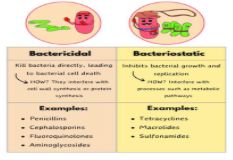
Bacteriostatic:- disrupt the production of CW
-
Prevent from reproduction
Bactericidal:- interfering with protein synthesis
- Arresting bacterial growth
-
Antibiotics do not damage human cells but they may produce side effects like allergic.

- Some vaccines can produced by fermentation
it includes:- vaccines for
-
Bordetella pertussis
-
Salmonella typhi
-
Vibrio cholerae
-
Mycobacterium tuberculosis
-
Clostridium tetani



- In the field of Bioelectronics, living organisms(or their enzymes or organs) are linked with electrodes, and biological reactions are converted into electrical currents by biosensors.
Biosensors:-
-
measures components in beer
-
monitor pollutants
-
detect flavor compounds in food


-
Is focusing on DNA analysis.
-
Using blood, saliva and hair
-
Also fingerprints are very important tools to investigate crime.
-
Determines the paternity cases of the Child.



1. Which hormone of the following is produced for dwarf peoples.
A. Insulin
B. Plasminogen activators
C. Antibiotics
D. Growth hormone
2. Which antibiotics of the following is fermented from bacterial cells?
A. streptomycin
B. ampicillin
C. methicillin
D. oxacillin
3. Which area of application of biology is monitoring pollutants detected flavor compound in food?
A. Forensic science
B. Biosensors
C. Tissue culture
D. Transgene
4. Related with antibiotics activity, which one of the following is correctly matched?
A. Bacteriostatic –arresting bacterial cell
B. Bactericidal-arresting bacterial cell
C. Bactericidal-disrupting bacterial CW
D. Bacteriostatic-disrupting bacterial CM
5. To determine the paternity cases of the Child, DNA can be taken from
A. Saliva
B. Hair
C. Blood
D. All
Answer
1. D 2. A 3. B 4. B 5. D
Biohydrometallurgy: is new discipline that uses microbes to extract metals from ores.
-
Copper metals originally were leached from wastes of ore crushing as a result of an inorganic chemical reaction.
-
It was discovered that this leaching is due to the action of Thiobacillus ferrooxidans (Chemolithotrophic acidophilic bacteria).
Biohydrometallurgy
-
It oxidizing the sulfur that binds copper,zinc,lead & uranium into their sulfide minerals with a result that releases of the pure metal.
-
It converts the copper into water soluble form it can be used by humans.
-
Thiobacillus ferroxidans releases iron from sulfide.
-
The combination of:-
T. Ferrooxidans and T.thiooxidans degrade copper & iron ores.


-
The combination of:-
Leptospirillum ferrooxidans and T. organoparus,degrade pyrite( FeS2) & Chalcopyrite( CuFeS2) neither can degrade alone.


Solid wastes are grouped in to two:-
-
Biodegradable components (food waste, textiles, paper etc)
-
Non-biodegradable components( metals,plastics,rubbles etc)


-
Aerobic processes give way to anaerobic and the generation of methane gas.
-
Fungi, bacteria and actinomycetes breaks down organic substances and produces CO2,water and humus that are relatively stable organic compound.

-
The aim of wastewater treatment is the removal of undesirable substances and hazardous microorganisms in order that the water may safely enter a watercourse such as a river or stream.
-
It reduces the incidence of waterborne diseases like Cholera.

-
The water may be come from domestic or commercial sources (highly toxic industrial effluents).
-
Sewage is liquid wastes that contains faecal matter ( human or animal).

-
The effectiveness of the treatment process is based on the reduction of the waste water’s biochemical oxygen demand ( BOD)
-
BOD measures the amount of oxygen needed by microorganisms to oxidize its organic components.
-
A high BOD leads to the removal of oxygen from water, an certain indicator of pollution.
-
Waste treatment occurs in two ways
Primary Treatment :-
-
Is physical way
-
involves the removal of floating objects
-
followed by sedimentation
-
Removes up to 1/3 of the BOD value.

The second treatment involves microbial oxidation.
-
This may take in two ways:-
1. The traditional trickling filter process and
-
Develops a biofilm comprising bacteria,protozoa,fungi and algae.
-
BOD reduced by 80-85%
2. Active sludge process
-
The main components of the biofilm is the bacterium zoogloea, which secretes slime forming aggregates called flocs, which microorganisms attached on.

-
Before being discharged to watercourse, it is treated with chlorine to remove any pathogenic microorganisms.
-
The problem encountered with activated sludge is that of bulking.
-
This is caused by filamentous bacteria like Sphearotilus natans.
-
It is not settling properly and consequently passing out with the treated water.

- Bioremediation is the use of living organisms or their products for the detoxification and degradation of environmental pollutants.
- The process is also known as biodegradation( in which toxic pollutants is degraded).


-
Is a fuel (ethanol) that obtained by the fermentation of plant material like corn.


-
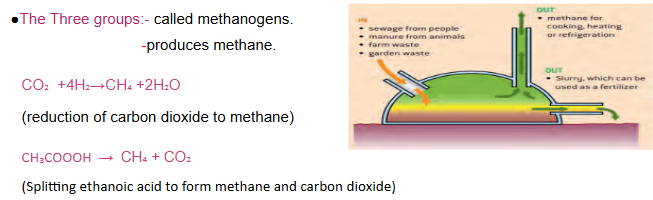
Biogas is produced by bacteria and archaeans from organic matters in fermenters.
-
Is combustible gas produced from the anaerobic breakdown of organic matter such as manure.
-
Three communities of anaerobic microbes required are:-
- The first group:- converts the raw organic waste into organic acids, alcohol, hydrogen and carbon dioxide.
-
The second group:- use the organic acids and alcohol to produce acetate, carbon dioxide and hydrogen.

1.The combination of which of the following bacteria degrades copper and iron?
A. T.Ferrooxidans
B T.thiooxidans
C. T. organoparus
D. A and B
2. A discipline that uses microbes to extract metals from ores is_________
A. Hydrometallurgy
B. Metallurgy
C. Biometallurgy
D. Biohydrometallurgy
3. Which one of the following is biodegradable solid waste?
A. Metal
B. plastic
C. Textiles
D. Rubbles
4. Which one of the following is non-biodegradable solid waste?
A. Textiles
B. food waste
C. Paper
D. Plastic
5. Which one of the following is false about primary waste treatment?
A. Is physical way
B. involves the removal of floating objects
C. involves microbial oxidation
D. remove up to 1/3 of the BOD value
Answer
1. D 2. D 3. C 4. D 5. C

- Enzymes can be produced by commercial fermentation using readily available feed stocks such as corn-steep liquor or molasses.
- Fungi (e.g. Asperillus) or bacteria (e.g Bacillus) are two of the commonest organisms used to produced the enzymes.


-
Proteases: removing hair from animal hides; cheese manufacturing; tenderizing meat.
-
Lipase: for removal of fatty stains.
-
Pectinases: maximizing juice extraction.
-
Amylase: production of glucose from starch.



-
It use of bacteria, fungi and viruses to kill insects.
-
Bacteria :- Bacillus thuringiensis and Bacillus popilliaes are the two insecticides
-
Fungi :- Beauveria bassiana and Metarhizium anisopliae are used for control of the Colorado potato beetle
-
Viruses:- Nuclear polyhedrosis virus(NPV),granulosis virus and Cytoplasmic polyhedrosis Virus (CPV)


- The use of tumor-inducing (Ti) plasmid of Agrobacterium tumefaciens to introduce glyphosate resistance into soybean crops.


- Genetically modified plants protected against attack by insect pests.


- Crops like BT-Cotton, the genes of Bacillus thuringiensis(Bt), are inserted in cotton crop in order for development of certain protein in it which is very toxic to many insects.


- Animals that have been modified to express recombinant DNA.


- Manipulating the DNA of plants, creating GMO, has helped to create desirable traits such as disease resistance, herbicides and pesticide resistance, better nutritional. Value, better shelf life.


- Herbicides like glyphosate,which kill any green plant but become harmless as soon as they reach the soil.


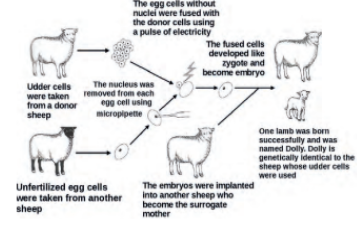
- Animal cloning is the process of producing exact copy of an organism ( example Dolly)
- Biological Warfare(BW) also known as germ warfare is the use of biological toxins or infectious agents such as bacteria,viruses,and fungi with the intent to kill or incapacitate humans, animals or plants as an act of war.