

1.4 Historical Issues and Contributors

Isaac Newton
-
Isaac Newton contributions laid the foundations for classical physics/classical mechanics.
-
He contributed to the Scientific Revolution of the 16th and 17th century by formulating three laws of motion, known as Newton's laws of motion

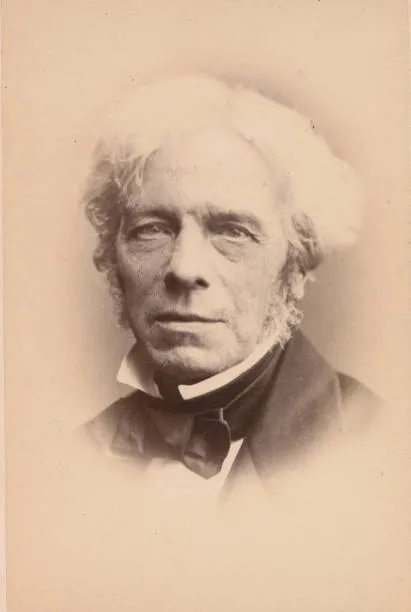
Michael Faraday
-
Michael Faraday contributed a lot to the field of electromagnetism. In 1821 he succeeded in producing mechanical motion by means of a permanent magnet and an electric current.
-
Ten years later he converted magnetic force into electrical force, thus inventing the world’s first electric generator.

James Prescott Joule
-
He studied the nature of heat, and discovered its relationship to mechanical work. This led to the law of conservation of energy.
-
Joule’s work helped lay the foundation for the first of three laws of thermodynamics that describe how energy in our universe is transferred from one object to another


Marie Curie
-
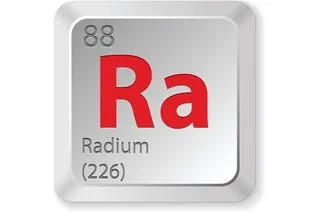
Marie Curie conducted pioneering research in the field of nuclear physics, particularly on radioactivity.
-
She is considered as the mother of modern nuclear physics. She discovered elements polonium and radium.


Albert Einstein
-
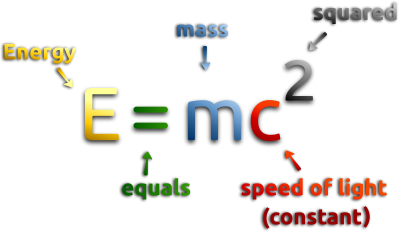
Albert Einstein is known for developing theory of relativity. This revolutionary theory had a profound impact on classical mechanics and the underlying philosophy of physics.
-
He is widely acknowledged to be one of the greatest physicists of all time.
-
Einstein also made important contributions to the development of the theory of quantum mechanics.


1. The Greek word ’Phusis’ for nature is appropriate in describing the field of physics. Which one of the following is the best answer for this?
(a) Physics is a natural science that studies life and living organisms on habitable planets like Earth.
(b) Physics is a natural science that studies the laws and principles of our universe.
(c) Physics is a physical science that studies the composition, structure, and changes of matter in our universe.
(d) Physics is a social science that studies the social behavior of living beings on habitable planets like Earth.
2. A moving car suddenly comes to a rest after applying brakes. Which branch of physics do you think is appropriate to explain this phenomenon?
(a) Mechanics
(b) Acoustics
(c) Electromagnetism
(d) Nuclear physics
(e) None of the above
3. Which of the following is not one of the branches of physics?
(a) Thermodynamics
(b) Optics
(c) Classical physics
(d) Evolution
4. Which of the following is not a historical contributor in physics?
(a) Willebrod Snell
(b) Daniel Bernoulli
(c) Thomas Young
(d) Charles Darwin
5. Which of the following institution/project does not apply the principle of physics?
(a) Ethiopian Aviation Industry
(b) Grand Ethiopian Renaissance Dam (GERD)
(c) Quality and Standard Authority of Ethiopia
(d) Ethiopian Radiation Protection Authority
(e) None of the above
6. Which branch of Physics is most important when studying the nature and behavior of light?
(a) Quantum Mechanics
(b) Nuclear Physics
(c) Optics
(d) Thermodynamics
7. Galileo’s famous experiment at the leaning tower of Pisa demonstrated that
(a) what goes up must come down
(b) all objects fall to earth at the same rate, regardless of their mass
(c) heavier object falls faster than lighter object of the same size
(d) gravity does not act on a falling object
8. Which physicist is known for developing the theory of relativity?
a) James Joule
b) Isaac Newton
c) Albert Einstein
d) Niels Bohr
9. Marie Curie conducted pioneering research on ________.
a) Electromagnetic fields
b) Radioactivity
c) Classical mechanics
d) Quantum mechanics
10. Michael Faraday is best known for his contributions to the field of ________.
a) Mechanics
b) Electromagnetism
c) Thermodynamics
d) Nuclear Physics
Answer
1. B 2.A 3. D 4.D 5.E
6. C 7.B 8.C 9. B 10. B